
By Dena Falken For 30 years, I’ve been doing one thing: training legal professionals to use English with precision. Not theory. Not classroom English. Real training for real documents — contracts, negotiations, cross-border deals — where one word can cost millions. Legal-Ease International was my first home for that work. It still is. But I wanted a place that was just mine. My name. My voice. My archive. That’s why I built denafalken.com. D E

People ask me how a legal English trainer ended up loving the stock market. The truth is, I never left my first profession. I just found a second one that rewards the exact same skill. For thirty years, I have trained lawyers across more than fifty countries to read contracts the way a surgeon reads an X-ray. Every word matters. A misplaced modifier can cost a client millions. A vague verb can sink a deal.
For thirty years, I have trained lawyers, translators, and legal professionals in more than fifty countries. And in those thirty years, I have watched brilliant legal minds lose — not on the law, but on the language. The law was fine. The English failed. A contract worth millions turned on a single comma. An overtime statute worth millions more turned on a comma that wasn’t there. These are not hypotheticals. These are real cases, real
My book Million Dollar Words: When One Word Costs Millions now has its own page on my personal website — real cases where a single word cost millions of dollars. Read about it here: https://denafalken.com/million-dollar-words.html
A comma is the smallest thing on the page. It has cost companies millions. In 2006, Rogers Communications in Canada signed a contract with Aliant for access to utility poles. One clause read: the agreement “shall continue in force for a period of five years from the date it is made, and thereafter for successive five year terms, unless and until terminated by one year prior notice in writing by either party.” One comma —
Thirty years ago, there was no social media. No Google ads. No online anything. I built Legal-Ease International the guerrilla way. I went door to door. I made posters and left them at universities. I sent faxes — stacks of them — and flyers. Every lawyer I ever trained, every seminar I ever filled, started with shoe leather and a photocopier. Now it’s all online. The tools changed. The work didn’t. You still have to
I don’t just train lawyers. I write the books they keep on their desks. Million Dollar Words: When One Word Costs Millions — real cases where a single word cost millions of dollars. The kind of stories I tell in seminars. The kind that make a room go quiet. The Global Legal English Masterclass — essential terminology for cross-border documents. Thirty years of training, distilled. Both are on the Legal-Ease bookstore now. The Kindle’s on
A market can crash. A person can walk away with six years of your life. But nobody — nobody — can take what’s in your head. That’s why studying matters. Not the diploma on the wall. The actual knowing. Every contract term you master, every nuance of English you lock in, every case you dissect — that becomes part of you. It travels. It compounds. It shows up in the negotiation when you need it

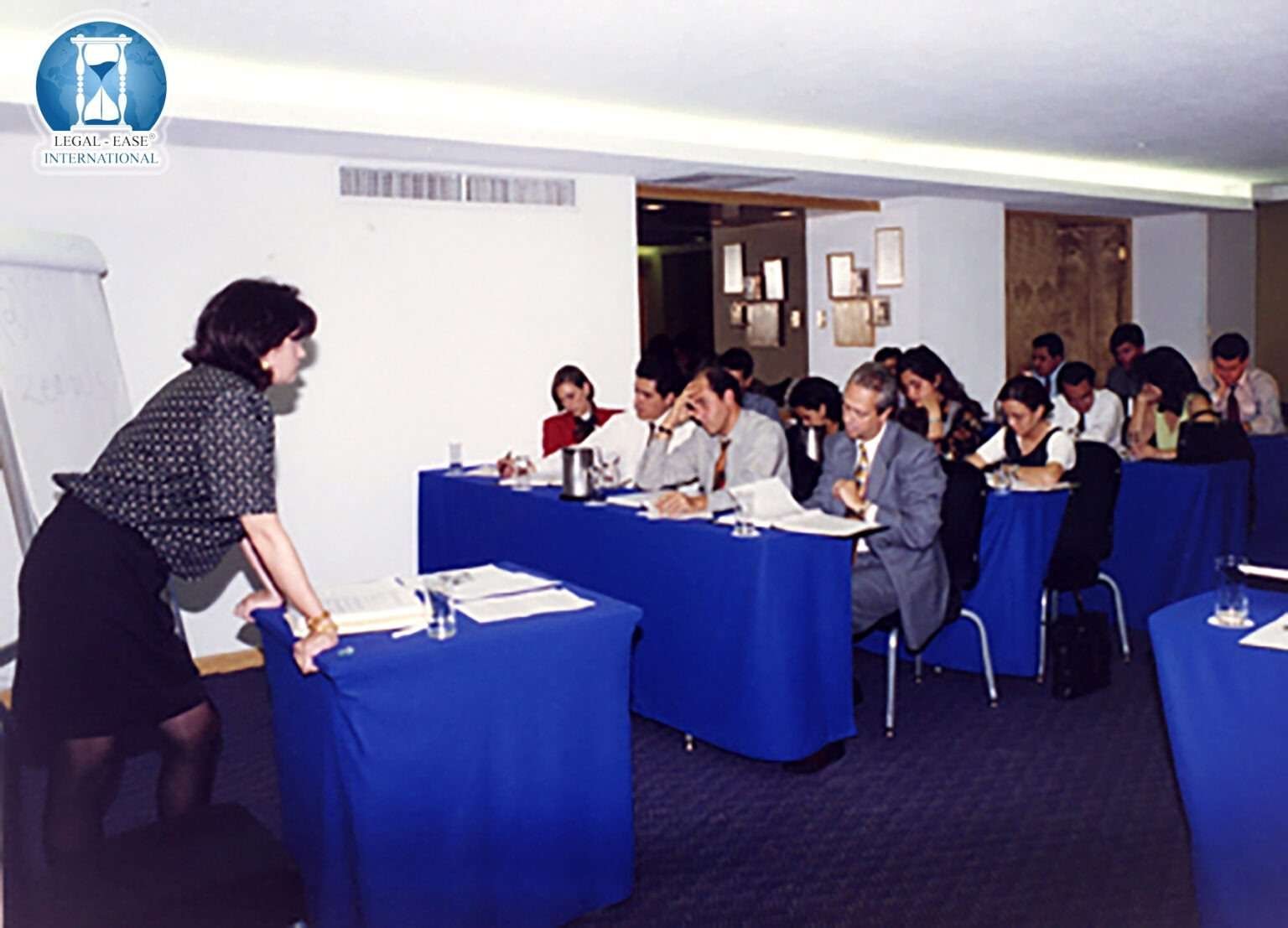
Thirty years. Fifty-plus countries. Thousands of lawyers, translators, judges, and law students. I could tell you what Legal-Ease International does. I could tell you why Legal English is a different language from English. I could tell you that one wrong word in a contract has cost companies millions. But you shouldn’t take my word for it. Take theirs. Our students — from Mexico City to Panama, from Bogotá to Tegucigalpa, from Santiago to São Paulo
“Shall” has ruled contracts for centuries. The Tenant shall pay rent. Sounds authoritative. Sounds legal. It’s also a mess. Courts have spent decades arguing over whether “shall” means must, will, should, or may — and in more than one famous case, a single “shall” cost millions. Modern drafters are killing it. Must for obligations. Will for future actions. Should for recommendations. Each word does one job. Precision isn’t about sounding legal. It’s about being understood.