

For thirty years, Legal-Ease International has trained lawyers to read contracts the way a deal actually turns on them. Not theory. The word on the page. One word can move millions. Material. Shall. Notwithstanding. Get it wrong, and the deal lives or dies on that one word. That is the work: precision reading, in plain language, for lawyers across more than fifty countries. Legal-Ease International. The language that decides the deal. Dena Falken, J.D., Columbus
This is a lesson from my book, Million Dollar Words. “Material” looks harmless. It sits quietly in a contract — material breach, material adverse effect, material change — and nobody argues about it at signing. They argue about it later, when the money is on the line. That is the trick. “Material” has no fixed size. It means important enough to matter. And “important enough” is exactly what two sides fight over when a deal
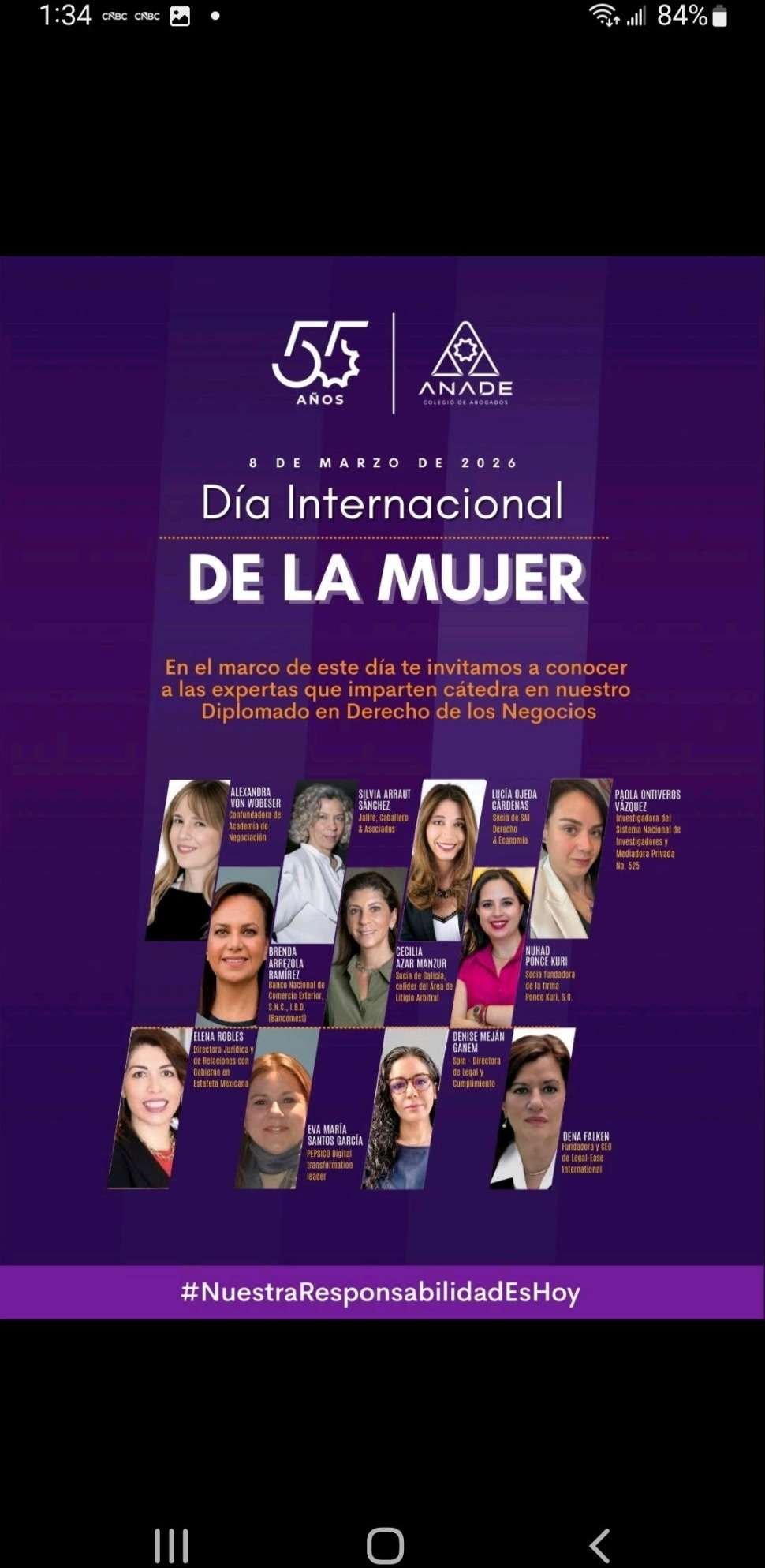
On March 8, 2026, for International Women’s Day, ANADE — the Colegio de Abogados, Mexico’s bar association, celebrating 55 years — featured the women experts who teach in its Diplomado en Derecho de los Negocios, its Business Law diploma program. Dena Falken is one of them. The ANADE poster lists her as “Dena Falken, Fundadora y CEO de Legal-Ease International” — founder and CEO — among a dozen of Mexico’s leading women in business law,
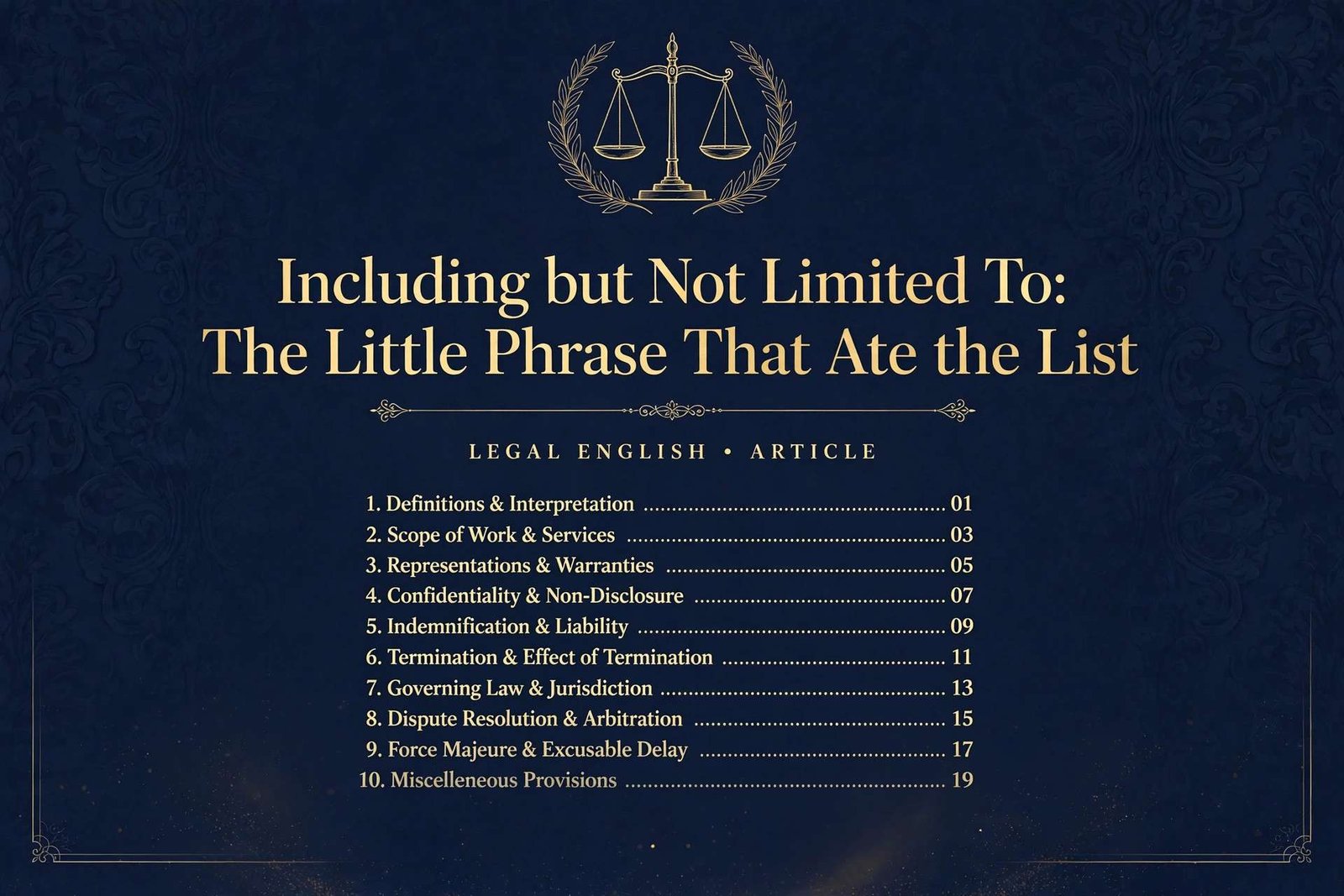
A contract lists five things. Then comes the word “including.” Then a fight about the sixth thing — the one that wasn’t listed. That fight has cost companies millions, and it always starts the same way: somebody assumed “including” meant “only.” It doesn’t. Not by itself. “Including” introduces examples. It does not close the list. That is the default rule in contract law, and it has a Latin name lawyers love to throw around: ejusdem
Berkshire Hathaway didn’t change its religion when Greg Abel took the chair. It changed its preacher — and the sermon is the same: patience, cash, and businesses you’d be happy to own if the market closed for ten years. That’s compounding. Not a trick, not a trade. The quiet arithmetic of leaving good things alone and letting time do the heavy lifting. I spent thirty years teaching lawyers that one word in a contract can
By Dena Falken Every contract has a pecking order, and one word sits at the top of it: “notwithstanding.” When a clause begins “notwithstanding anything to the contrary,” it is announcing that it wins. Whatever the rest of the agreement says — earlier sections, later sections, schedules — this clause overrides it. I have watched experienced executives sign documents where a single notwithstanding clause quietly dismantled protections their own team had negotiated three sections earlier.

“Time is of the essence.” It reads like decoration — five formal words lawyers sprinkle into contracts out of habit. It is not decoration. It is the clause that converts a late delivery from an inconvenience into a breach serious enough to walk away from the deal. Without it, courts in many common-law jurisdictions treat deadlines as targets: miss one, pay some damages, keep performing. With it, the date becomes a condition — miss it,

By Dena Falken Every cross-border contract I have ever reviewed hides the same landmine: the word “shall.” Writers reach for it because it sounds legal. It sounds important. And then two law firms bill six figures arguing about what it means — because “shall” has been read by courts as mandatory, as permissive, and as a simple future tense, sometimes in the same jurisdiction. Modern drafting has delivered its verdict. The U.S. federal style guidance
By Dena Falken Say “without prejudice” in a negotiation and half the room flinches — as if an insult just landed. Nothing of the kind happened. Those two words are a shield, not a slap. In common-law practice, marking a communication “without prejudice” signals that it belongs to a genuine attempt to settle a dispute — and that it generally cannot be thrown back at you in court as an admission. It is how lawyers
By Dena Falken — B.A., American University; J.D., Columbus School of Law, Catholic University of America, Washington, D.C. A mediator friend said it to me this week about contracts, and I haven’t stopped thinking about it: read every word like it’s yours. Because it is. The moment you sign, every comma in that document belongs to you — including the one you didn’t read. In thirty years of training legal professionals across fifty countries, I’ve